
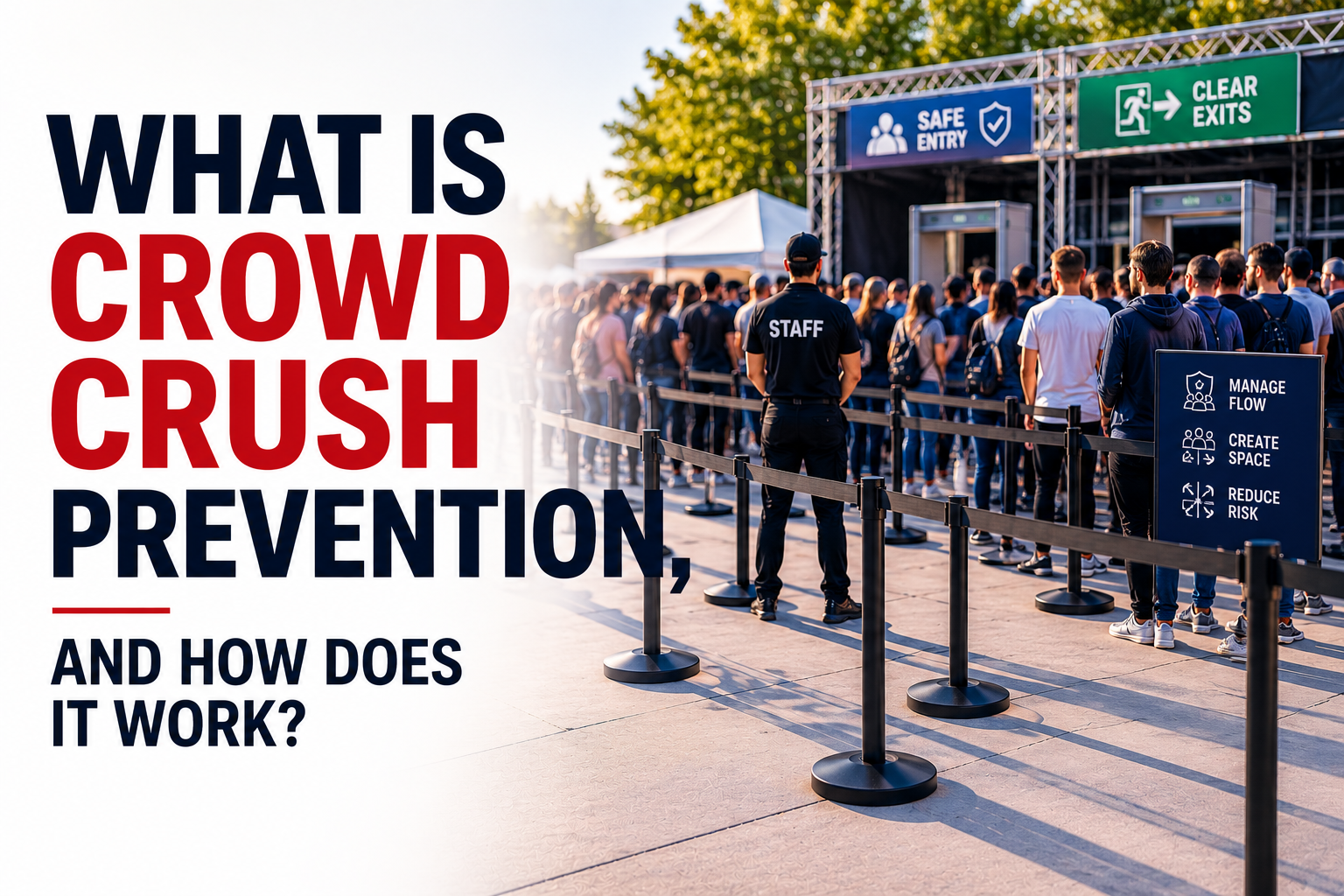
What is Crowd Crush Prevention, and How Does It Work?
Crowd crush incidents don’t happen because people panic for no reason—they happen when space, movement, and planning collide in the wrong way. From concerts and festivals to public gatherings and sporting events, managing large crowds safely requires more than just barriers and security guards. This is where crowd crush prevention comes in.
Crowd crush prevention focuses on understanding crowd behavior, controlling crowd flow, and eliminating high-risk pressure points before they become dangerous. Through strategic planning, proper venue layout, trained personnel, and real-time crowd monitoring, organizers can reduce the risk of crowd surges and keep attendees safe. In this guide, we’ll break down what crowd crush prevention is, why it matters, and how professional crowd control measures help prevent emergencies before they happen.
What Is Crowd Crush Prevention?
Crowd crush prevention refers to the planning, monitoring, and control strategies used to reduce the risk of dangerous crowd pressure in high-density environments. It focuses on managing crowd flow, density, and movement before conditions become unsafe.
This is a crowd safety practice focused on reducing dangerous pressure within large groups of people. It involves planning how crowds move, monitoring density in real time, and using control measures to prevent overcrowding, bottlenecks, and sudden surges. The goal is to keep crowd movement stable, predictable, and safe at all times.
Benefits of Crowd Crush Prevention
- Reduces the risk of injury or fatalities by preventing crowd surge incidents through proactive Crowd Control, proper venue capacity limits, and safer event layout planning
- Improves crowd movement and comfort using effective crowd management strategies that keep foot traffic smooth and predictable
- Strengthens response during emergency situations by supporting emergency crowd management, clear evacuation routes, and faster decision-making
- Enhances patient safety and public safety outcomes by applying proven Safety Tips that reduce panic and confusion
- Protects event organizers from liability by showing responsible planning, monitoring, and compliance with Crowd Control best practices
Potential Risks or Limitations
- Requires upfront planning and coordination, including a detailed crowd control plan, safety plan, and emergency plan that align with the venue layout or store layout and overall public safety goals
- Crowd management technology—such as pressure sensors and digital signage—depends on trained operators and clear security measures to support effective Crowd Control
- Crowd surges can still occur in emergency situations if crowd control measures, queue management, and enforcement are not consistently applied
- Without active monitoring and Crowd Control Security Services, even a well-designed emergency crowd control plan may fail to prevent a crowd surge during high-stress moments
Crowd Risk Factors and Prevention Methods
Crowd-related incidents often stem from predictable risk factors that can be identified and managed with the right prevention strategies. High crowd density, poor venue layout, limited entry and exit points, and sudden changes in crowd movement can all increase pressure and lead to dangerous conditions. Alcohol use, weather changes, and emotional triggers—such as delays or unexpected announcements—can further heighten risk.
| Risk Factor | Why It’s Dangerous | Prevention Method |
| High crowd density | Limits movement | Density monitoring |
| Bottlenecks | Creates pressure buildup | Flow redesign |
| Poor visibility | Delays response | Surveillance systems |
| Untrained staff | Slow intervention | Safety training |
Effective prevention methods focus on early intervention. This includes thorough risk assessments, controlled venue capacity, clear signage, and well-planned traffic and queue management. Real-time monitoring, trained crowd control personnel, and clear communication systems allow organizers to spot emerging issues quickly and adjust crowd flow before pressure builds. When risks are anticipated and managed proactively, crowd safety improves significantly.
For additional tips on Crowd Safety, these tips might be helpful.
FAQ’s
Q: What causes a crowd crush?
A: Excessive pressure from people packed too closely together causes a crowd crush.
It often happens when crowd density is high and crowd surges occur, highlighting the need for proper crowd control solutions and security measures.
Q: How many people does it take for a crowd crush to happen?
A: Even a relatively small crowd can cause a crush if density is high.
Densities of 4–6 people per square meter can become dangerous, emphasizing the importance of crowd control measures to manage flow.
Q: What is considered unsafe crowd density?
A: More than 4 people per square meter is generally unsafe.
At this level, individuals cannot move freely, making crowd control methods and crowd control barriers essential to prevent accidents.
Q: Can crowd crush happen outdoors?
A: Yes, outdoor events can experience crowd crushes.
High-density zones, bottlenecks, and crowd surges outdoors require robust crowd control solutions and security measures.
Q: Are crowd crush incidents predictable?
A: Some incidents can be anticipated, but not all.
Monitoring crowd density and movement, combined with effective crowd control measures, helps identify early warning signs.
Q: What role does crowd monitoring technology play?
A: It tracks density and movement to prevent dangerous situations.
By detecting crowd surges and congestion, organizers can deploy crowd control barriers and other crowd control methods in real time.
Q: Who is responsible for crowd crush prevention?
A: Event organizers, venue managers, and security staff share responsibility.
They must implement crowd control solutions, maintain security measures, and train personnel in proper crowd control methods.
Q: Is crowd crush the same as a stampede?
A: No, a crowd crush is due to pressure, while a stampede involves uncontrolled movement.
Crowd control measures can help prevent both by managing crowd density and minimizing the risk of sudden surges.