
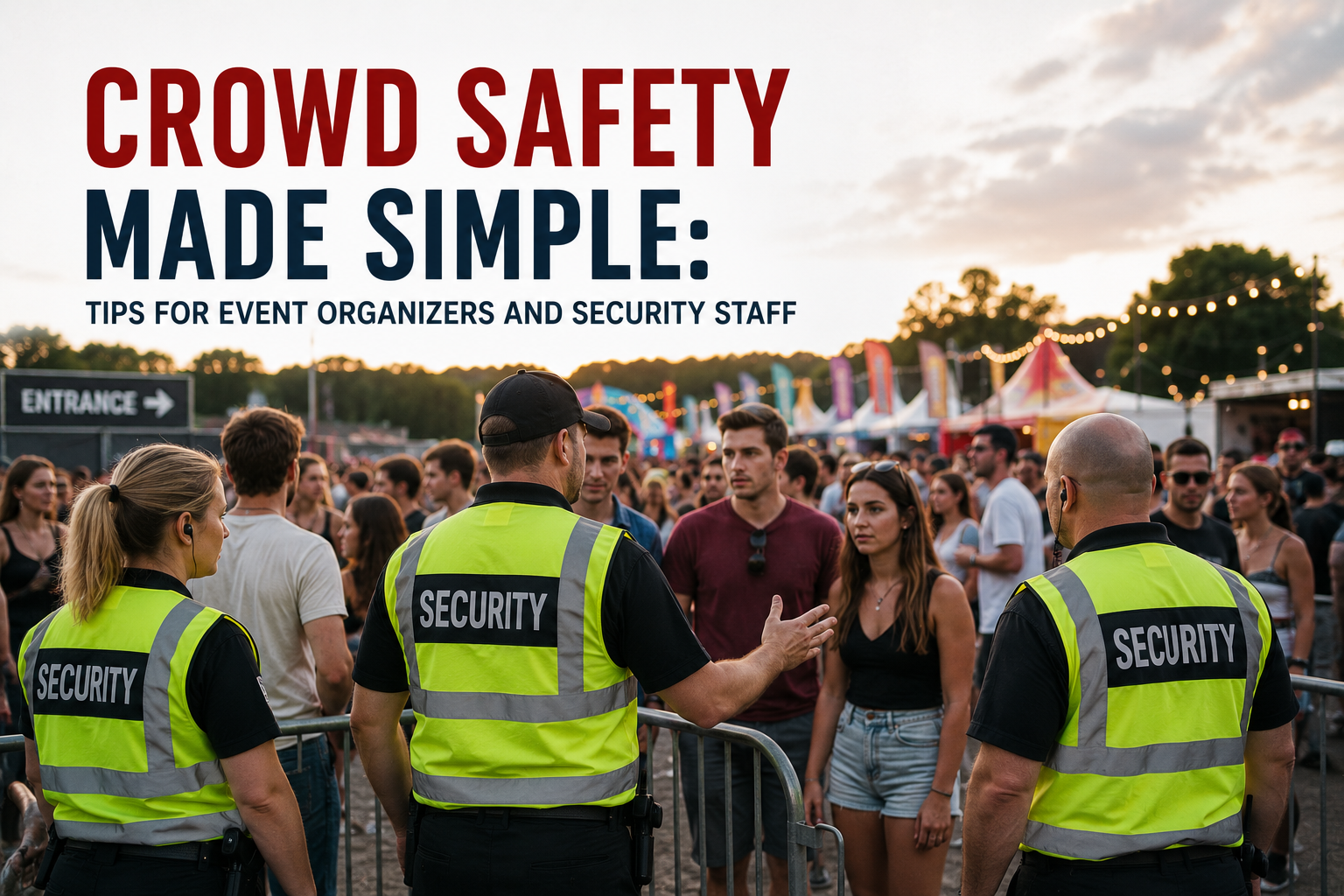
Crowd Safety Made Simple: Tips for Event Organizers and Security Staff
Hosting public events, especially outdoor concerts or other large gatherings, requires careful planning to ensure the safety of attendees. Crowd safety is not just about preventing accidents; it’s about understanding crowd behavior, managing crowd flow, and having a robust emergency response plan in place. Event organizers, venue operators, and security personnel must work together to anticipate risks, mitigate hazards, and provide a safe environment for everyone.
Understanding Crowd Dynamics and Crowd Behavior
A critical component of crowd management is understanding crowd dynamics and crowd behavior. People in huge crowds often behave differently than they would individually, influenced by the collective energy, peer behavior, and perceived anonymity. Frustration or excitement can quickly escalate into dangerous situations, such as a crowd crush or frenzied fans near stages or entrance points.
Mapping crowd density and monitoring crowd flow in real-time helps security officers and emergency personnel identify potential risks before they escalate. Tools such as mapping apps and surveillance systems can assist in tracking how attendees move through the venue, allowing for proactive crowd control measures.
Creating a Comprehensive Crowd Management Plan
A crowd management plan is essential for every public event. Event organizers should coordinate with police departments, fire departments, rescue teams, and medical response teams to prepare for any situation. The plan should include clearly marked emergency exits, first aid stations, fire exits, and designated areas for emergency personnel.
Ticketed events should consider maximum occupancy levels to avoid overcrowding, which can lead to dangerous crowd density and structural collapse. Venue operators must ensure that crowd control barriers, stage barricades, and other physical security measures are in place to maintain order and safety.
Security Staffing and Coordination
Adequate staffing is crucial for effective crowd control. Security personnel, security guards, and security workers must be strategically positioned throughout the venue, including at venue exits, information booths, customer service centers, and high-density areas near stages. Police officers and emergency personnel should be visible in uniform to reassure attendees and provide a sense of authority.
A security checklist helps ensure that all responsibilities are covered, including staffing first aid stations, monitoring crowd flow, maintaining communication systems, and supervising structural safety. Clear instructions and coordination among security staff reduce confusion and improve response times during emergencies.
Emergency Planning and Protocols
Emergency planning is a key component of crowd safety. Event organizers must establish emergency protocols for various scenarios, including medical emergencies, fire incidents, and potential crowd crush situations. First-aid kits should be readily available, and medical response teams must be prepared to perform medical evacuation if necessary.
Emergency protocols should include:
- Clear communication systems for alerting security personnel, police officers, and fire departments
- Procedures for guiding attendees to emergency exits and safe areas
- Steps for coordinating medical response teams, rescue teams, and fire departments in case of structural collapse or other hazards
- Evacuation plans for both indoor and outdoor concerts, including designated venue exits and safe assembly areas
Monitoring and Managing Crowd Flow
Monitoring crowd flow is essential to prevent dangerous situations in large gatherings. Security personnel should track crowd density and intervene when areas become too congested. This can include redirecting attendees to less crowded areas, opening additional venue exits, or temporarily pausing entry to certain sections.
Crowd control barriers and stage barricades help manage crowd flow and prevent frenzied fans from overwhelming performers or security staff. Assigning safety personnel to monitor high-density zones and using mapping apps to visualize crowd movement can prevent incidents before they escalate into serious safety hazards.
Communication is Key
Effective communication systems are critical for crowd safety. Security officers, police officers, and emergency personnel must be equipped with radios or other communication devices to coordinate responses quickly. Attendees should have access to information through ID bracelets, customer service centers, and information booths, allowing them to locate first aid stations or emergency exits easily.
Using a combination of public announcements, digital signage, and mapping apps ensures that everyone is aware of emergency procedures. A go bag containing essential items, including a cell phone, first-aid supplies, and contact information for emergency services, can be invaluable for safety personnel and security staff during emergencies.
Medical Response and Emergency Services
Medical emergencies can occur at any public event, and quick intervention can save lives. First aid stations, staffed by trained medical personnel, should be distributed throughout the venue. First-aid kits must be accessible, and medical evacuation protocols should be established for transporting individuals to hospitals or emergency facilities if required.
Coordination with fire departments, rescue teams, and police departments ensures a seamless response to incidents such as crowd crushes, structural collapse, or sudden medical emergencies. Security instructions must be clear and communicated effectively to all safety personnel to avoid delays in treatment or evacuation.
Crowd Safety Tips for Event Organizers
Event organizers play a critical role in ensuring crowd safety. Some key tips include:
- Conduct thorough risk assessments before the event and identify potential hazards
- Implement a security checklist covering all aspects of safety, from crowd control barriers to first aid stations
- Train security staff, security guards, and emergency personnel on emergency protocols and crowd behavior
- Clearly mark venue exits, fire exits, and emergency assembly points
- Use technology such as mapping apps, communication systems, and ID bracelets to track crowd density and provide real-time updates
- Maintain maximum occupancy levels and avoid overcrowding in high-traffic areas
- Assign customer service centers and information booths to assist attendees with questions or concerns
By following these guidelines, event organizers can minimize risk and create a safe environment for attendees.
Responding to Emergencies
During an emergency, security officers and police officers must act quickly and decisively. Crowd control measures, including crowd control barriers, stage barricades, and clear guidance to venue exits, can prevent panic and reduce injuries. Safety personnel should work with fire departments and rescue teams to manage evacuation, medical response, and structural safety.
Security staff must remain calm and follow the established crowd management plan. Using communication systems to relay instructions to both attendees and other emergency personnel prevents confusion and ensures coordinated action.
Conclusion: Prioritizing Safety in Large Gatherings
Ensuring crowd safety at public events requires a comprehensive approach. By understanding crowd dynamics, monitoring crowd density, and implementing crowd control measures, event organizers can prevent dangerous incidents like crowd crush, structural collapse, or medical emergencies.
Coordination among security personnel, police officers, emergency personnel, and medical response teams is essential. Adequate staffing, visible uniforms, first-aid kits, and clearly marked emergency exits contribute to a safer experience for attendees.
With proper emergency planning, effective communication systems, and proactive monitoring, event organizers can ensure that huge crowds enjoy their experience safely.
Crowd safety is not just a responsibility. It is a commitment to protecting lives and ensuring that public events are both enjoyable and secure.