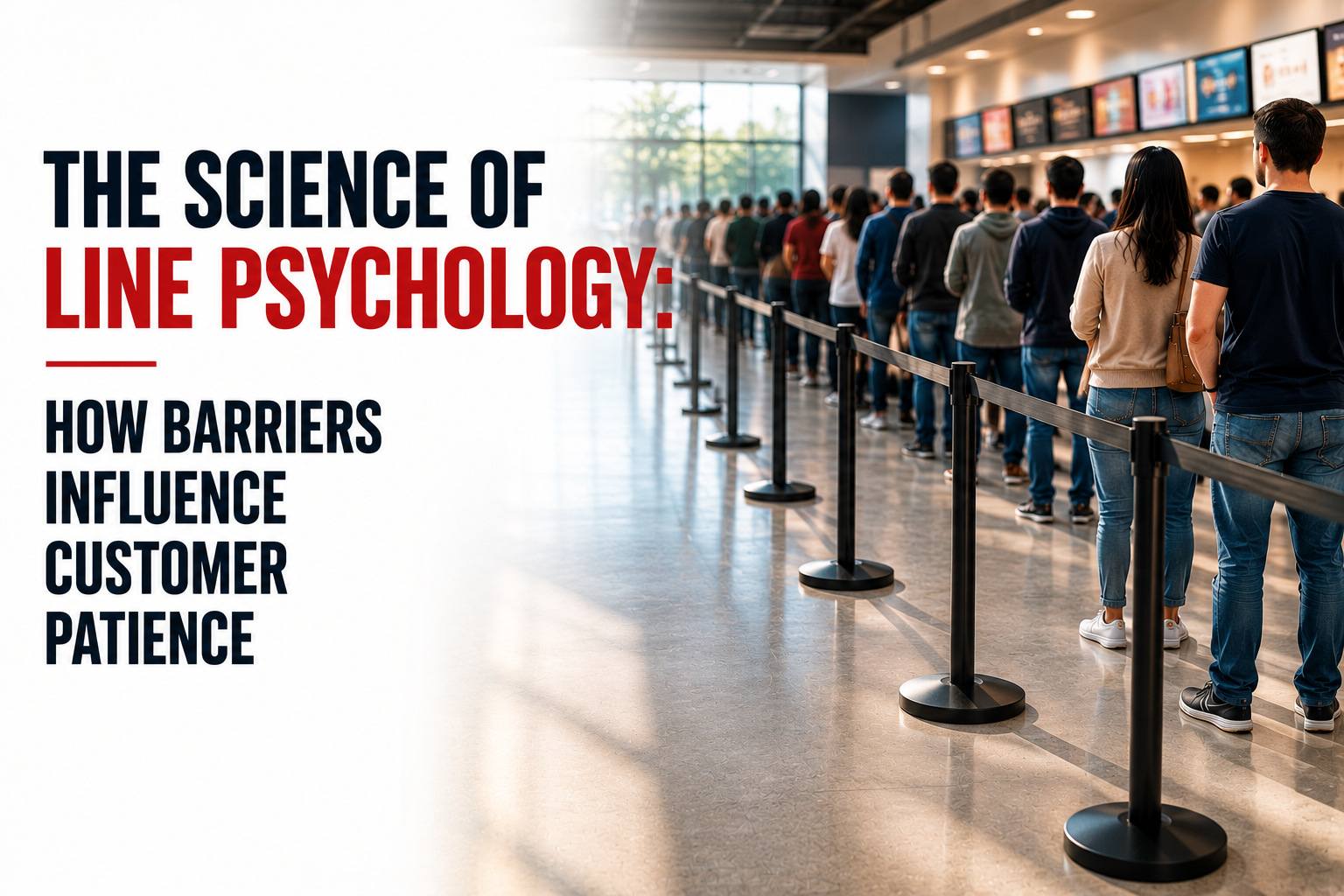
The Science of Line Psychology: How Barriers Influence Customer Patience
Have you ever wondered why some people patiently wait in line while others become frustrated after just a few minutes? This phenomenon, often referred to as “line psychology,” is a critical factor in customer experience and business success. Businesses ranging from retail stores to healthcare facilities use physical and visual management tools, such as barriers and stanchions, to manage queues effectively. But what’s the science behind this approach, and why do barriers have such a profound effect on customer patience?
This blog explores the psychology of waiting, the role of visual management, and how strategic use of barriers can prevent excessive wait times and improve customer satisfaction. We’ll also touch on communication skills, cultural differences, and other factors influencing queue behavior, based on insights from systematic review studies and industry research.
Understanding Line Psychology
Line psychology is the study of how people perceive and react to waiting in queues. Humans naturally dislike waiting because it creates a sense of lost time and decreased control. The perception of time passing is more important than the actual duration. For instance, a 10-minute wait that feels structured and fair is perceived as shorter than a disorganized five-minute wait.
Systematic review studies on queue management have shown that structured environments, clear signage, and organized lines significantly improve customer patience. These findings are relevant not only to retail but also to sectors like healthcare, where communication barriers and cultural differences can influence patient experiences during excessive wait times.
Why Barriers Matter in Queue Management
Barriers are more than physical dividers; they are psychological tools. Visual management elements such as stanchions, retractable belts, and rope barriers create order and transparency, which reassures customers. Here’s how barriers influence behavior:
- Perception of Fairness
Customers want assurance that the process is fair. Barriers clearly define the order of service, reducing disputes and anxiety. - Sense of Progress
Strategically placed barriers can create segmented pathways, giving customers visual cues of movement. This prevents the frustration associated with excessive wait and gives a sense of progress. - Reduced Uncertainty
A clear path eliminates ambiguity. Without barriers, customers often experience stress due to unclear boundaries and fear of others cutting in line.
These psychological benefits reduce perceived wait times and boost overall satisfaction, which is essential in both public and professional environments.
The Role of Communication Skills and Cultural Differences
Queue management doesn’t rely on physical tools alone—human interaction plays a key role. Effective communication skills among staff and health professionals can prevent misunderstandings and frustration in waiting areas, especially in healthcare settings.
Communication barriers, such as language differences or lack of clear instructions, can exacerbate negative feelings during excessive wait times. Cultural differences also affect patience; in some cultures, waiting is seen as a sign of respect, while in others, delays can be perceived as poor service. Staff should be trained to recognize these differences and use communication strategies that enhance transparency and empathy.
How Visual Management Reduces Stress
Visual management refers to the use of signage, pathways, and physical barriers to guide behavior. When customers see clear signs, floor markings, and structured queues, they feel more in control. This psychological effect is backed by research in behavioral science and organizational management.
Retailers and healthcare facilities often employ these strategies:
- Signage with Estimated Wait Times: Setting expectations reduces anxiety.
- Color-Coded Queues: Helps customers quickly identify where they belong, especially in multi-service environments.
- Barrier Systems for Flow Control: Ensures smooth transitions between stages of service.
These measures create an environment that feels organized, reducing stress and improving overall experience.
Excessive Wait and Its Impact on Customer Behavior
Excessive wait times are a major cause of customer dissatisfaction and abandonment. Studies show that after a certain threshold, customers are likely to leave the queue, even if they have invested time already—a phenomenon known as the “psychology of abandonment.”
Businesses must adopt strategies to combat excessive wait:
- Real-Time Queue Updates: Display screens showing wait times maintain transparency.
- Engagement During Wait: Offering information or entertainment can make time feel shorter.
- Efficient Staff Allocation: Proper staffing prevents bottlenecks that lead to long waits.
These tactics, combined with physical barriers, can significantly enhance patience and reduce negative behaviors like line cutting or complaints.
Applications in Healthcare and Service Industries
Healthcare settings often face unique challenges. Patients waiting for consultations or procedures experience heightened anxiety, making effective queue management essential. Health professionals must not only manage the physical flow of people but also address communication barriers that arise due to medical jargon or cultural differences.
Systematic review research highlights that communication skills and empathetic interactions from staff improve patient perceptions of wait times. Integrating visual management strategies—such as designated waiting zones, clear barrier systems, and visible information boards—creates a more reassuring environment.
In retail and service industries, structured queues reduce stress during peak hours and enhance the sense of fairness. Businesses that combine physical barriers with real-time communication gain a competitive advantage by fostering trust and loyalty.
Best Practices for Implementing Barriers and Queue Strategies
To maximize the effectiveness of barriers in influencing customer patience, follow these best practices:
- Choose the Right Barrier System
Use stanchions with retractable belts or rope systems for flexibility and aesthetics. - Incorporate Visual Management Tools
Combine barriers with signage and floor markings for better guidance. - Train Staff on Communication Skills
Address communication barriers proactively and provide cultural sensitivity training. - Use Technology to Reduce Uncertainty
Display wait times and service updates through digital screens or mobile apps. - Monitor and Adjust
Regularly assess queue flow and customer feedback to refine strategies.
These measures ensure that barriers not only guide physical movement but also enhance psychological comfort.
Conclusion
The science of line psychology shows that waiting is as much an emotional experience as a physical one. Barriers and visual management systems help create order, reduce uncertainty, and improve perceptions of fairness, ultimately increasing customer patience. Coupled with strong communication skills, cultural awareness, and strategies to prevent excessive wait, these tools transform queues from a source of frustration into a structured, positive experience.
For businesses and healthcare providers alike, understanding these psychological principles is essential for improving customer satisfaction, maintaining efficiency, and fostering trust. When you invest in proper queue systems and barrier strategies, you’re not just managing lines—you’re managing perceptions, emotions, and overall brand experience.