
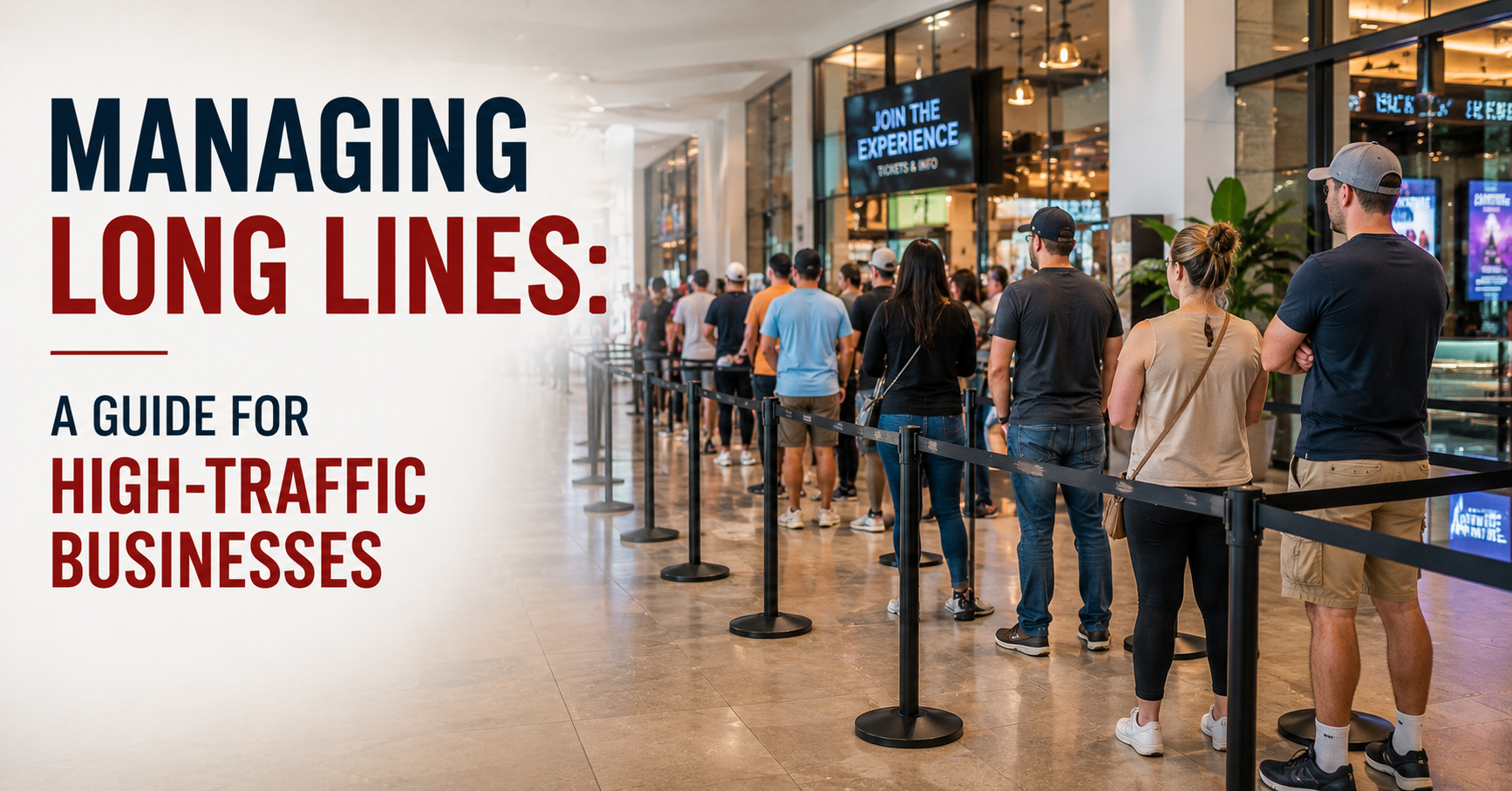
Managing Long Lines: A Guide for High-Traffic Businesses
In today’s fast-paced environment, managing customer wait times has become a top priority for high-traffic businesses. Whether it’s a busy retail store, a medical facility, or a service center, the ability to handle queues effectively can make or break the customer experience. Efficient queue management not only streamlines operations but also enhances satisfaction, loyalty, and overall business success.
Implementing a structured queue management strategy helps reduce wait times, improve customer flow, and ensure that resources are allocated efficiently. With the right tools—such as stanchions, digital signage, and virtual queue systems—businesses can transform long lines from a source of frustration into a seamless and positive experience.
Understanding Customer Flow
Customer flow refers to the movement of customers through various touchpoints within a business—from arrival and waiting to service and departure. Managing this flow effectively is key to minimizing delays and boosting satisfaction.
To improve customer flow, businesses must first understand how and when customers interact with their services. By leveraging data and analytics, companies can gain insights into behavior patterns, identify peak periods, and anticipate customer needs. This knowledge enables proactive planning and resource allocation, preventing congestion and improving service delivery.
In physical spaces, tools like stanchions are essential for directing customer movement and maintaining organized lines. They help prevent crowding, guide traffic, and improve overall space utilization—especially in busy retail, entertainment, and transportation environments.
Identifying bottlenecks, such as limited service points or inefficient layout design, and making small changes like repositioning stanchions or signage can have a big impact on how smoothly customers move through the business.
Implementing Effective Queue Management
A well-designed queue management system is essential for businesses looking to manage high volumes of customers efficiently. These systems help reduce physical lines, shorten perceived wait times, and improve operational flow.
Stanchions play a critical role in traditional queuing systems, allowing businesses to form clear, orderly lines and maintain safety during busy times. When paired with floor decals or signage, they help create intuitive traffic patterns that reduce confusion and speed up service.
Virtual queuing is a modern solution that allows customers to join a line remotely—via smartphone apps or kiosks—freeing them from having to physically stand in line. This flexibility is especially helpful in sectors like healthcare, retail, or dining.
Digital signage is another powerful tool. It can guide customers, display estimated wait times, and provide real-time instructions—all while managing expectations. Combining digital displays with well-placed stanchions ensures a visually organized and efficient waiting area.
Self-service kiosks further streamline the process, reducing the need for staff intervention and helping customers access services quickly. When these technologies are implemented in tandem with traditional crowd control solutions like stanchions, the result is a more controlled, efficient, and pleasant environment.
Peak Times Strategy
Handling peak hours effectively is a major challenge for high-traffic businesses. During these times, lines can grow quickly, and customers are more likely to become impatient or dissatisfied.
Analyzing data to understand exactly when peak times occur allows businesses to plan ahead. Scheduling additional staff, opening extra service counters, or extending hours during busy periods can all help manage increased demand.
In crowded spaces, stanchions are vital during peak hours. They help maintain order and ensure customers follow designated pathways, preventing accidents or service delays.
Virtual queuing can be especially beneficial during these periods, allowing customers to wait off-site or continue shopping while in the queue. Additionally, providing multiple service or checkout points can reduce pressure on individual staff and enhance overall efficiency.
Encouraging customers to visit during off-peak times—using promotions or appointment scheduling—can help balance customer flow and reduce congestion. During these quieter periods, the flexible reconfiguration of stanchions allows for quick adaptation of space usage based on real-time demand.
Customer Experience Enhancement
Queue management is not just about reducing lines—it’s about creating a positive customer experience. Long wait times can lead to frustration, but when handled well, even a brief wait can feel acceptable.
Communicating with customers during their wait is essential. Real-time updates via digital signage or mobile apps help manage expectations and reduce anxiety. Knowing how long they’ll wait and where they are in the queue gives customers peace of mind.
Self-service options like kiosks and online tools empower customers and reduce dependency on staff, increasing satisfaction. Meanwhile, the strategic placement of stanchions helps maintain privacy and personal space in line, which can be especially appreciated in healthcare or government service settings.
Comfortable seating, climate control, informative signage, and entertainment in the waiting area also enhance the customer experience. These small improvements, combined with efficient queue systems and thoughtful use of stanchions, show customers that their time and comfort are valued.
Operational Efficiency Optimization
Queue management doesn’t only benefit the customer—it’s a cornerstone of operational efficiency. By reducing chaos and streamlining service delivery, businesses can optimize how they use staff, space, and time.
A queue management system helps businesses monitor service metrics, track average wait times, and identify inefficiencies. Combined with clear physical infrastructure—such as stanchions and directional signs—this data can inform improvements in layout and workflow.
Customer feedback also plays a vital role in operational enhancement. Reviewing common pain points or recurring complaints helps businesses make targeted changes. For example, if customers frequently report confusion about where to line up, reconfiguring the stanchion layout or updating signage can quickly resolve the issue.
Proper resource allocation is another key aspect. Using real-time data, businesses can ensure that staffing levels and service counters align with demand—especially during peak periods. Together, these strategies help reduce congestion, improve throughput, and create a more professional and reliable operation.
Conclusion
Managing long lines effectively is critical to business success. With thoughtful queue management strategies in place, businesses can significantly reduce wait times, improve the customer experience, and optimize operational flow.
Understanding how customers move through your space—and using tools like virtual queuing, digital signage, and stanchions—can transform wait time into a positive, well-organized experience. These improvements build customer loyalty, enhance brand reputation, and give businesses a competitive edge.
By embracing modern queue management practices and proven crowd control tools, businesses demonstrate a commitment to professionalism, efficiency, and customer care—foundations that drive long-term growth and success.