
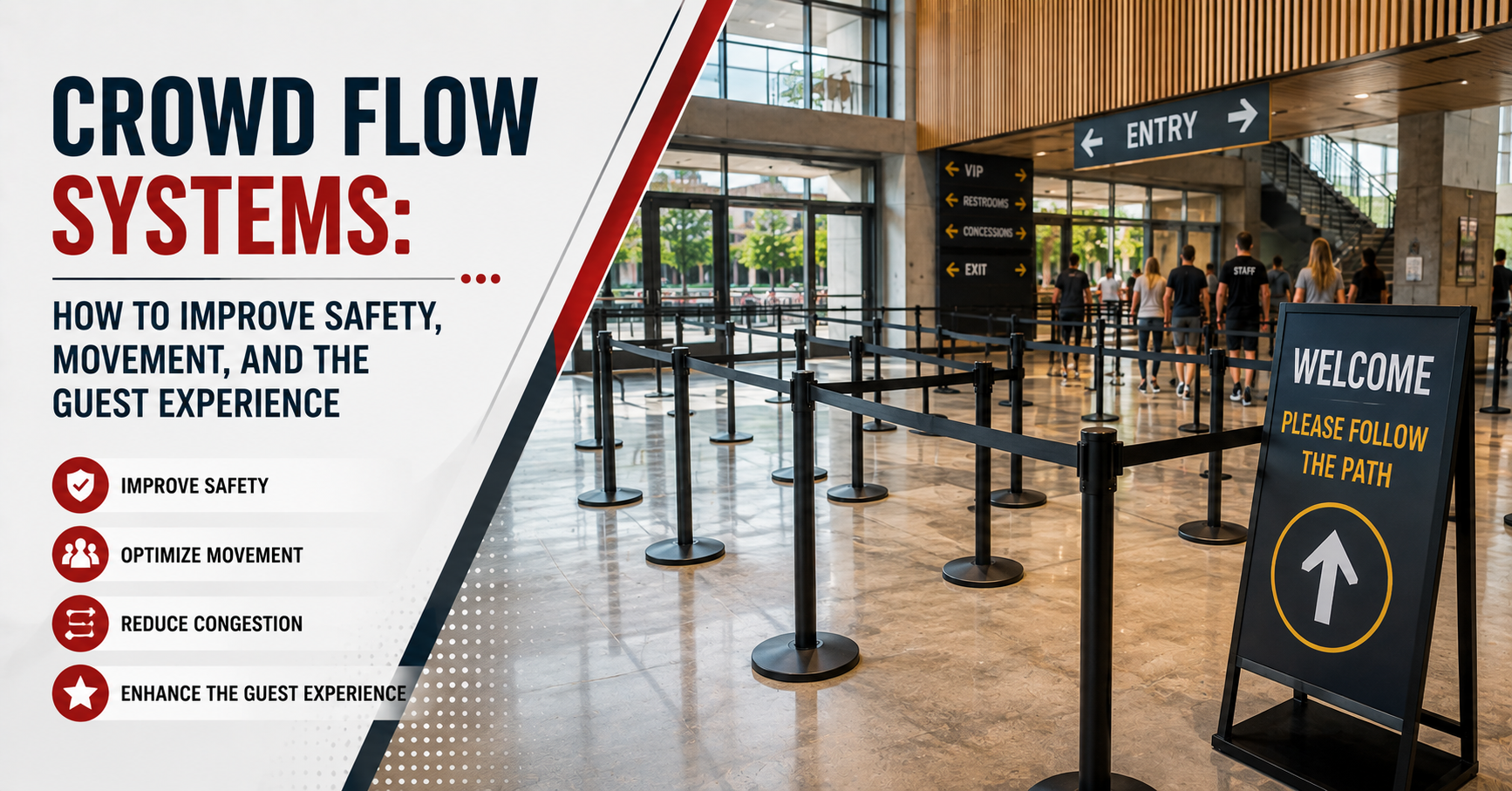
Crowd Flow Systems: How to Improve Safety, Movement, and the Guest Experience
Imagine walking into a packed concert, stadium, festival, or busy public venue. The event is exciting, but suddenly you’re stuck in a slow-moving line, people are crossing in different directions, and there’s barely enough space to move. That’s when you realize how much crowd flow can affect both safety and the overall guest experience.
A well-designed crowd flow system helps people move naturally and safely through entrances, exits, walkways, queues, and gathering areas. Effective crowd management goes beyond simply controlling where people go—it involves understanding crowd density, monitoring crowd movement, conducting regular crowd assessment, and recognizing crowd irregularities before they become serious problems.
With the right combination of crowd flow prediction, crowd control, and clear safety protocols, organizers can reduce congestion, respond to changing conditions, and create a smoother experience for everyone. In this blog, we’ll look at practical ways crowd flow systems can improve safety, movement, and guest satisfaction while helping venues stay prepared for the unexpected.
Crowd Flow Systems: How to Improve Safety, Movement, and the Guest Experience
Crowd flow systems are coordinated layouts, equipment, signage, procedures, and operational practices used to guide people through entrances, queues, walkways, service areas, and exits. When properly planned, they can support crowd control by reducing unnecessary congestion, clarifying pedestrian routes, organizing waiting areas, and creating a more predictable guest experience.
Effective crowd control is about much more than keeping people in designated areas. At a busy venue, event, stadium, festival, transportation hub, or public space, thousands of people may arrive, queue, move between zones, pass through security, and leave within a relatively short period. Without a clear plan, normal crowd movement can quickly develop into congestion, queue pressure, or dangerous bottlenecks.
This is where crowd flow systems and structured crowd flow management become essential. By combining physical crowd control equipment, trained personnel, real-time monitoring, thoughtful pedestrian flow planning, and technology, organizations can manage how people move through a space while improving both safety and operational efficiency.
A successful approach considers the entire visitor journey—from venue ingress and security screening to seating areas, concessions, pedestrian spaces, and final exit. The goal is simple: keep people moving safely, maintain operational control, and give guests a smooth experience from arrival to departure.
What Is a Crowd Flow System?
A crowd flow system is a combination of layout planning, barriers, stanchions, signage, queue design, staff procedures, and other methods used to guide pedestrian movement safely and efficiently. It helps manage how people enter, move through, queue within, and exit a venue while reducing congestion, improving crowd control, and supporting a smoother guest experience.
Rather than reacting to a crowd only after a problem develops, modern crowd management focuses on anticipating where people are likely to gather, how quickly they will move, and where additional support may be needed.
A complete system can include:
- Crowd control barriers and pedestrian barriers
- Queue barriers and retractable belt stanchions
- Directional signage
- Entrance and exit management
- Security checkpoints
- Queue management procedures
- Trained support teams
- Monitoring and communication systems
- Crowd density measurement
- Emergency response procedures
Together, these elements help create predictable pedestrian routes while giving staff greater visibility and operational control.
Potential Risks or Drawbacks of Poor Crowd Flow Planning
Effective crowd control depends on thoughtful planning, but poorly designed layouts can sometimes create new congestion instead of solving existing problems. Bottlenecks may develop when routes are too narrow, barriers are poorly positioned, or pedestrian traffic is forced through limited access points. Cross-flow between opposing pedestrian routes can also create confusion and slow movement. Learn more about how Crowd Control improves the flow of businesses here.
Other common issues include:
- Confusing routes or insufficient directional signage
- Overly narrow queue lanes and excessive queue lengths
- Blocked, inconvenient, or poorly positioned pathways
- Inadequate accessibility for people with mobility needs
- Poorly positioned barriers that restrict natural movement
- Failure to adjust layouts when crowd volume changes
- Increased crowd density around entrances, exits, or checkpoints
- Overreliance on equipment without active staff monitoring
Crowd flow systems should therefore be flexible and responsive. Barriers, stanchions, and signage are valuable tools, but they cannot replace active observation and decision-making. Staff should monitor crowd movement, queue pressure, and changing conditions so routes can be adjusted when necessary. A layout that works during a quiet period may not work when crowd volume suddenly increases, which is why ongoing crowd management remains an important part of maintaining safe and efficient pedestrian flow.
The Role of Crowd Flow Planning
Effective crowd flow starts long before guests arrive. Crowd flow planning should consider the layout of the venue, expected attendance, peak arrival periods, staffing requirements, security logistics, weather conditions, and the activities taking place throughout the site.
Understanding Venue Ingress and Entry Points
Venue entry is often one of the first major pressure points. Large groups can arrive within a short period, creating sudden increases in crowd density.
Organizers should assess:
- Number and location of entrances
- Expected arrival rates
- Ticket scanning capacity
- Security screening requirements
- Available pedestrian spaces
- Accessibility routes
- Staffing requirements
- Potential alternative entry routes
Managing venue ingress effectively can reduce delays and prevent queue build-up before guests even enter the main event area.
Managing Queues Before They Become Bottlenecks
Queue management is an important part of crowd flow management. A queue that begins as a normal line can quickly expand when processing speeds slow down.
Crowd control stanchions, retractable belt stanchions, and queue barriers can create clearly defined lanes and help prevent people from spreading into surrounding pedestrian areas.
Directional signage can also answer common questions before guests reach staff, such as where to enter, where to collect tickets, where security screening takes place, and which route leads to specific areas.
Using Barriers to Guide Pedestrian Traffic
Physical equipment remains one of the most practical tools for managing pedestrian traffic. Properly positioned barriers create visual and physical boundaries that encourage people to follow designated routes.
Crowd Control Barriers
Crowd control barriers can be used to separate pedestrian areas, establish restricted zones, create waiting areas, and guide people around potential hazards.
They can be especially useful for:
- Event entrances
- Security checkpoints
- VIP areas
- Temporary pedestrian routes
- Emergency access zones
- High-traffic walkways
- Outdoor events
The objective is not simply to block movement. It is to direct movement in a way that supports safe and efficient pedestrian traffic management.
Monitoring Crowd Density and Movement
Knowing how many people are present is useful, but understanding how they are moving can be even more valuable.
A venue may have an acceptable overall crowd density while one particular doorway, corridor, stairway, or checkpoint becomes heavily congested.
Why Crowd Density Matters
Crowd density refers to how closely people are concentrated within a particular area. As density increases, personal space decreases and movement can become more difficult.
Monitoring changes in crowd density can help teams identify developing crowd safety risks and determine when intervention may be necessary.
Understanding Crowd Movement
Crowd movement is influenced by many factors, including venue layout, signage, attraction locations, entry times, weather, transportation, and the behavior of other people.
By studying these patterns, organizers can identify recurring crowd bottlenecks and make improvements before the next event.
Technology and Modern Crowd Management
Technology is changing how organizations approach crowd control. Instead of relying exclusively on staff observations, venues can use data to provide a more detailed picture of what is happening throughout a site.
A modern Crowd Management Decision-Support System may combine information from multiple sources to help teams make faster operational decisions.
Sensors and Crowd-Counting Cameras
Different sensor techniques can be used to monitor movement and occupancy. A sensor system may help identify changes in crowd density, movement patterns, or activity within defined areas.
Crowd-counting cameras can also provide information about the number of people entering or leaving a particular zone. When used appropriately, these technologies can give operations teams a better understanding of changing conditions.
Preparing for Crowd Irregularities and Emergency Incidents
Not every crowd behaves according to plan. Sudden weather changes, delayed transportation, equipment failures, unexpected announcements, or emergency incidents can dramatically change pedestrian movement.
Effective crowd management plans should account for these possibilities.
Identifying Crowd Irregularities
Crowd irregularities may include sudden changes in direction, unexpected gathering, unusual crowd density, blocked pathways, or rapid movement toward a particular location.
Recognizing these patterns early allows teams to investigate the cause and determine whether intervention is required.
Building Strong Safety Protocols
Clear safety protocols should define who is responsible for monitoring conditions, who can make operational decisions, how teams communicate, and what actions should be taken when crowd safety risks increase.
Emergency planning should also protect critical access routes so emergency personnel can reach affected areas without unnecessary obstruction.
Frequently Asked Questions
1. What is a crowd flow system?
A crowd flow system organizes how people move through a venue or event space. It may use barriers, stanchions, signs, designated routes, and staff guidance to support orderly movement.
2. Why is crowd flow management important?
Crowd flow management helps venues organize pedestrian movement and manage busy areas more effectively. It can also make queues, entrances, exits, and designated pathways easier to navigate.
3. How does crowd control affect pedestrian flow?
Crowd control can influence where and how people move through a space. Properly positioned barriers, signs, and staff can help direct attendees toward established routes.
4. What equipment is used in crowd flow systems?
Common equipment includes stanchions, barriers, retractable belts, ropes, signs, and queue posts. The appropriate equipment depends on the venue layout, event requirements, and expected pedestrian volume.
5. How do stanchions help with crowd flow?
Stanchions help define queues and create clear pedestrian pathways. They can also separate areas and provide locations for directional or informational signage.
6. What is the difference between crowd flow and crowd control?
Crowd flow focuses on how people move through a space, while crowd control generally involves directing or managing that movement. Both can be part of a broader crowd management plan.
7. How can a venue reduce crowd congestion?
A venue can reduce congestion by planning suitable routes, organizing queues, using clear signage, and positioning staff where guidance may be needed. Layout and equipment should be adjusted based on the specific venue and expected attendance.
8. What causes crowd flow bottlenecks?
Crowd flow bottlenecks can result from narrow passageways, limited entrances, long queues, poorly positioned equipment, or competing pedestrian routes. Identifying these points during event planning can help organizers adjust layouts and procedures.
Crowd Flow Components and Their Common Uses
|
Crowd Flow Component |
Main Purpose |
Common Applications |
|---|---|---|
|
Retractable belt stanchions |
Create flexible queues and pedestrian lanes |
Retail, airports, events, service areas |
|
Rope stanchions |
Define organized or formal waiting areas |
Hotels, theatres, receptions |
|
Crowd control barriers |
Establish stronger physical boundaries |
Events, venues, outdoor spaces |
|
Wall-mounted barriers |
Create lanes without multiple floor-standing posts |
Corridors, entrances, permanent queue areas |
|
Directional signage |
Communicate routes and instructions |
Entrances, exits, queues, large facilities |
|
Sign holders |
Display instructions at decision points |
Check-in, queues, restricted areas |
|
Queue layouts |
Organize waiting areas |
Ticketing, security, registration, retail |
|
Staff guidance |
Respond to changing pedestrian conditions |
High-volume events and facilities |
A Smarter Approach to Crowd Control
The most effective crowd control strategy combines several layers of protection rather than depending on a single solution.
Physical barriers help shape movement. Signage communicates directions. Staff provide human guidance. Sensors and cameras can provide operational data. Predictive systems can help identify potential problems before they become serious.
Together, these tools create a more responsive approach to crowd flow management.
The goal is not to control every individual movement. It is to design an environment where safe movement is the easiest and most natural choice.
Final Thoughts
Effective crowd control begins with understanding how people move and what can cause that movement to change. From venue entry and queue management to security screening, pedestrian traffic, crowd density, and emergency response, every part of the guest journey can influence safety and operational efficiency.
By combining crowd flow systems, trained personnel, physical crowd control equipment, technology, and proactive planning, venues can reduce congestion, manage operational risk, and create a better experience for guests.
Ultimately, successful crowd management is about being prepared before the crowd becomes a problem. When organizations can anticipate movement, recognize developing pressure points, and respond quickly, they create spaces that are safer, more organized, and easier for everyone to navigate.