
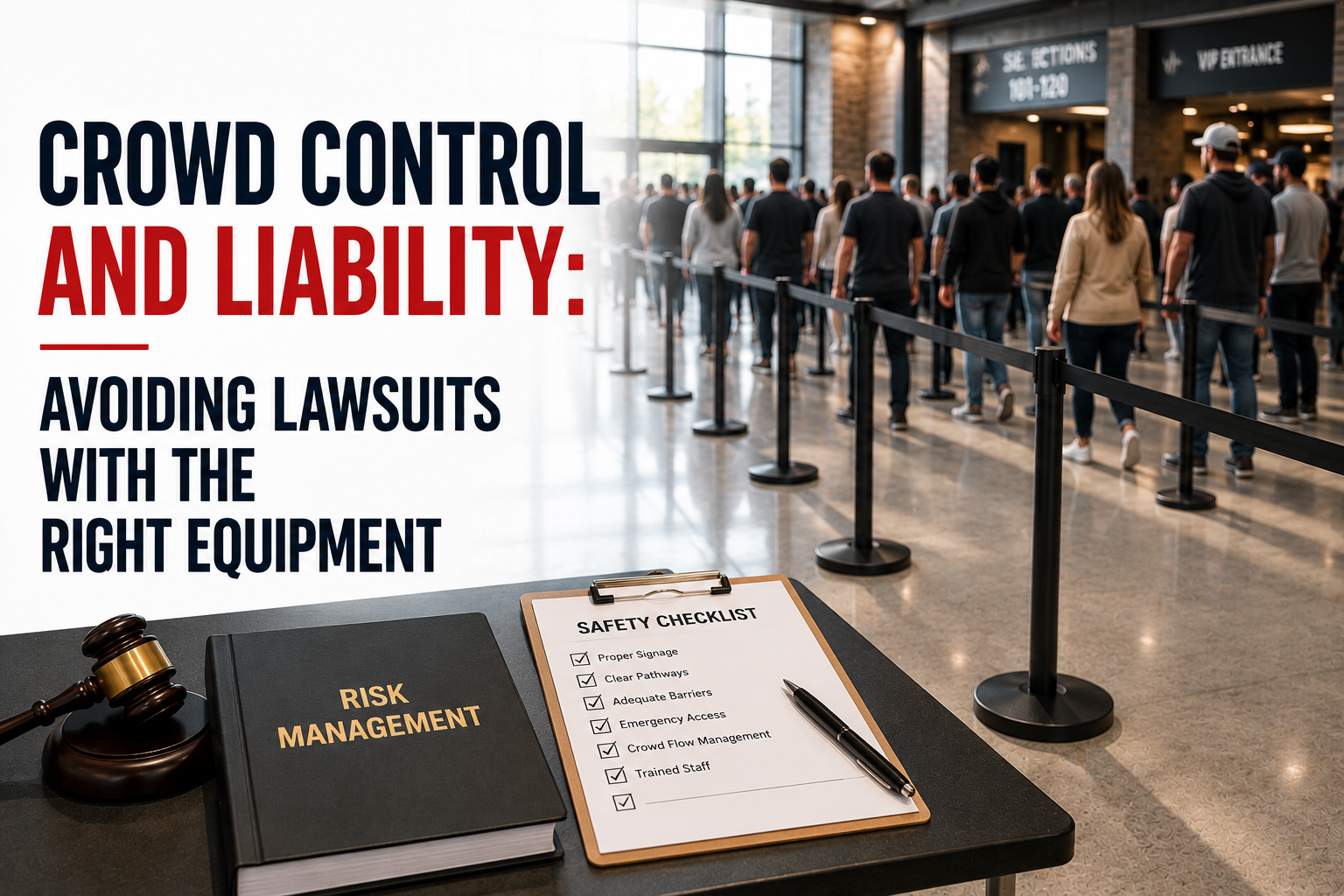
Crowd Control and Liability: Avoiding Lawsuits with the Right Equipment
When planning large-scale events or managing public venues, ensuring public safety isn’t just a moral obligation—it’s a legal necessity. Event organizers, venue managers, and facility operators face serious risks if crowd control measures and safety protocols are neglected. Failing to implement proper systems can lead to personal injury claims, premises liability lawsuits, and even business closures.
This blog explores how the right crowd control tools—such as fencing systems, plastic barriers, and interlocking steel barricades—play a crucial role in risk management strategies. You’ll learn why crowd control and liability go hand-in-hand, and how using the right equipment helps prevent accidents, reduce liability exposure, and maintain compliance with industry standards.
Why Crowd Control Is Essential for Legal Protection
Crowd management is a cornerstone of event planning, particularly in public entertainment environments, special events, and amusement parks. Inadequate planning can lead to crowd surges, structural issues, and hazardous conditions, resulting in emergency situations that may harm attendee safety.
Under building and safety codes, venue owners and event planners are legally obligated to provide safe crowd flow management. This includes establishing entry and exit strategies, ensuring emergency exits are clear, and implementing communication systems for emergency response. Non-compliance can result in legal recourse, fines, and severe damage to brand reputation.
Common Liability Issues Linked to Poor Crowd Management
- Personal Injury Claims
Slips, trips, falls, and injuries from overcrowded areas often result in premises liability lawsuits. - Inadequate Emergency Procedures
Failure to plan evacuation routes or provide first aid facilities can escalate emergencies into catastrophic events. - Negligent Security Measures
Lack of trained security personnel, surveillance cameras, and public address systems can increase liability issues during emergencies. - Non-Compliance with Legal Frameworks
Ignoring industry standards, human rights guidelines, or fire codes exposes venue operators to legal considerations and insurance complications.
Risk Assessment and Safety Protocols
Conducting a risk assessment before any event is vital. Venue operators should evaluate:
- Crowd behavior patterns to prevent congestion and crowd surges
- Space requirements for safe crowd flow and queue layouts
- Potential structural issues in public places and promotional areas
Based on the assessment, implement safety protocols such as:
- Access control systems and security access turnstiles
- Clear signage panels and post-top signage for navigation
- First aid stations and emergency services on standby
These steps not only safeguard public safety but also reduce legal risks.
The Role of Crowd Control Equipment in Liability Reduction
Proper crowd control equipment is the frontline defense against legal exposure. Essential tools include:
Crowd Control Barricades and Barriers
- Interlocking steel barricades for large-scale events and high-security zones
- Plastic barriers for outdoor stanchions and temporary closures
Queue Systems for Controlled Movement
- Retractable stanchions, rope stanchions, and chain stanchions for organized crowd flow
- Queue layouts with safety barriers to reduce wait times and improve customer experience
Fencing Systems and Gates
- Swinging gates and magnetic belt ends for secure access control
- Cast-iron bases, belt brakes, and rubber belt ends for added stability
These tools help prevent crowd movement hazards, minimize human rights complaints, and ensure compliance with building and safety codes.
Integrating Security and Safety Measures
Security measures must complement crowd control strategies to minimize liability. This includes:
- Deploying trained security professionals and law enforcement liaisons
- Installing surveillance cameras, public address systems, and crowd monitoring software
- Coordinating with emergency services for rapid response
By combining physical barriers with digital monitoring, venues can enforce safety zones, detect crowd behavior changes, and manage emergency procedures efficiently.
Insurance and Legal Considerations
Even the best safety systems can’t eliminate all risks. That’s where liability insurance comes in. Event planners and venue owners should secure:
- General liability insurance for public places and guest safety
- Professional liability insurance for security companies and event management teams
- Event planner insurance and business liability insurance tailored to entertainment events
Consulting an insurance expert ensures policies cover premises liability, legal recourse, and human rights compliance. This financial safeguard is critical in today’s litigious environment.
Venue-Specific Applications of Crowd Control
Different venue types require tailored crowd control tools:
- Amusement parks: Use plastic stanchions, safety barriers, and surveillance technologies to manage foot traffic.
- Retail environments: Rely on queue systems like rope stanchions and wall-mounted retractable belts for efficient space management.
- Industrial workplaces: Implement traffic control devices, safety zones, and security cameras to maintain worker safety.
- Large entertainment events: Deploy interlocking barricades, first aid facilities, and digital displays for public movement coordination.
Proper layout configuration prevents crowd surge, improves crowd flow, and minimizes liability issues.
Staff Training and Communication Systems
Even the best equipment fails without proper staff training. Security teams should know:
- Emergency procedures and evacuation routes
- How to operate crowd control panels, surveillance systems, and public address systems
- Human rights policies and ethical enforcement practices
Adding communication systems, like public address systems and mobile alerts, ensures emergency response plans are executed without delay.
Common Mistakes That Lead to Liability
- Ignoring risk assessment during event planning
- Blocking emergency exits with crowd control barriers
- Overlooking space management and queue configurations
- Failing to integrate safety guidelines with security frameworks
Avoiding these mistakes protects public safety and shields venue owners from legal recourse.
Conclusion
In an era of large-scale events and heightened safety expectations, crowd control and liability are inseparable. The right crowd control equipment, combined with risk management strategies, security measures, and insurance coverage, ensures attendee safety, minimizes legal exposure, and protects your reputation.
When in doubt, consult industry standards, work with experienced security professionals, and invest in quality crowd control supplies. Your guests’ safety—and your business—depend on it.