
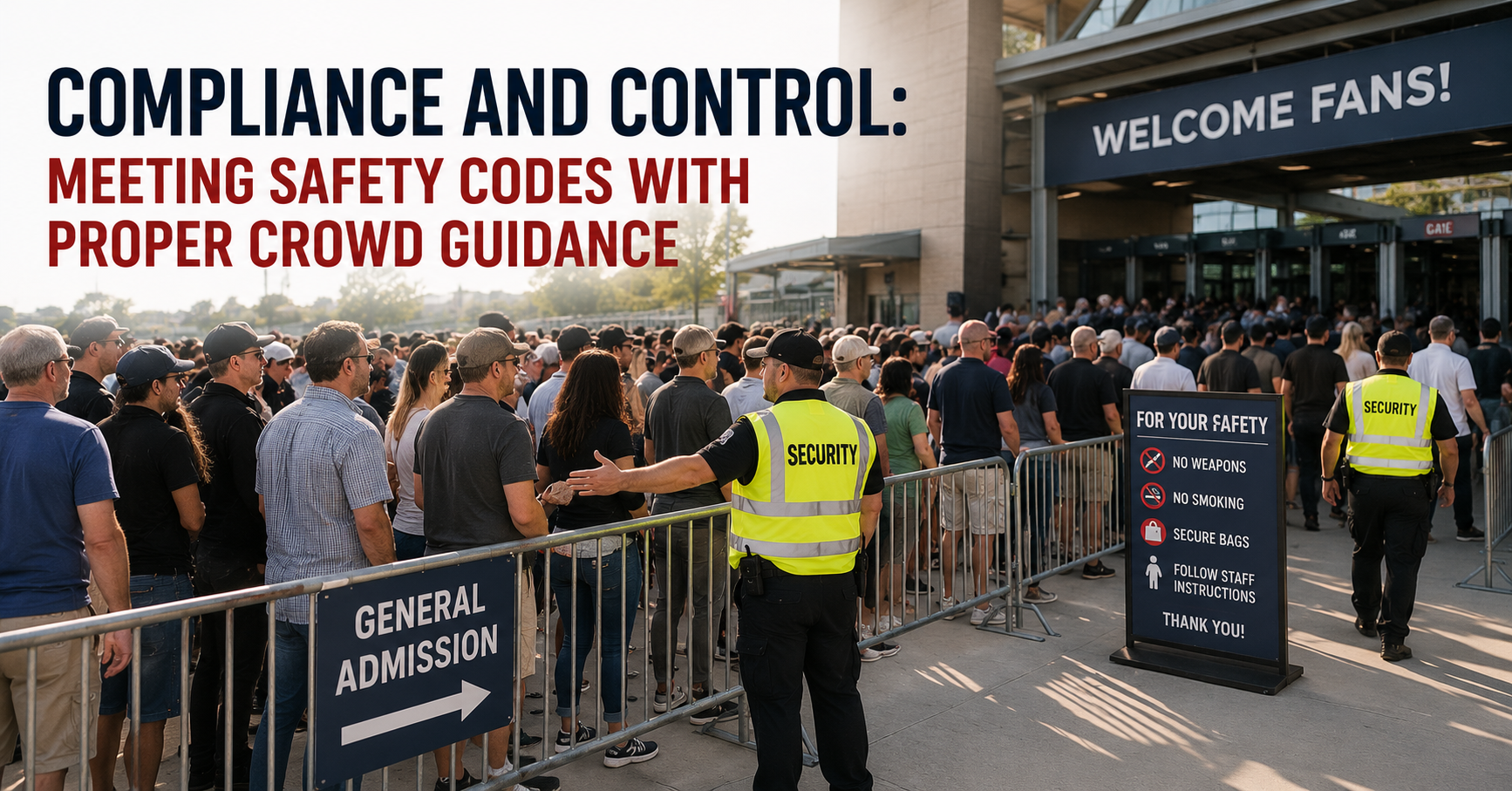
Compliance and Control: Meeting Safety Codes with Proper Crowd Guidance
Ensuring safety at public events is more than good planning—it’s a legal and ethical obligation. Crowd management plays a vital role in meeting safety regulations, minimizing risk, and creating secure, accessible environments for all attendees.
In this blog, we explore how to meet event safety codes through thoughtful crowd guidance strategies, including the smart use of equipment like stanchions, real-time monitoring, and regulatory compliance training.
Introduction to Crowd Management
Crowd management is a foundational aspect of event safety. It involves planning for the safe movement and control of people throughout a venue to prevent incidents like overcrowding, blockages, or emergency response delays.
Key principles include:
- Conducting a thorough risk assessment to identify potential hazards.
- Collaborating with local authorities and venue operators to ensure compliance.
- Implementing control measures that align with fire codes, ADA accessibility standards, and capacity limits.
🎯 Expert Tip: Don’t wait until inspection day. Integrate compliance requirements into your crowd management plan from the beginning.
Understanding Crowd Control and Safety Compliance
Crowd control is the operational side of crowd management—how you physically manage attendee movement, prevent congestion, and maintain safe access to emergency exits.
To stay compliant with safety codes:
- Define clear entry and exit points using tools like stanchions and signage.
- Monitor crowd density in real-time to prevent violations of capacity limits.
- Ensure emergency routes remain unobstructed at all times.
🛑 Failing to comply with safety regulations can lead to costly fines, permit cancellations, or legal consequences.
Emergency Preparedness and Response
No event plan is complete without a robust emergency action plan (EAP). Emergencies can escalate quickly in crowded environments, so your response must be immediate, organized, and compliant.
Components of an effective EAP include:
- Evacuation routes marked by stanchions and visible signs.
- Staff trained in fire extinguisher use, medical triage, and crowd redirection.
- Real-time communication systems for notifying attendees and emergency responders.
📋 Pro Compliance Tip: Keep printed versions of your emergency procedures at key staff stations and ensure accessibility for individuals with disabilities.
Best Practices for Event Safety and Compliance
Meeting safety codes is not a one-time task—it’s an ongoing process of planning, training, and execution.
Best practices include:
- Performing regular venue walkthroughs to spot risks.
- Using barriers, stanchions, and floor markings to guide foot traffic safely.
- Designing your crowd flow with accessibility in mind.
By taking a proactive approach, event organizers reduce the likelihood of safety violations and build trust with both attendees and regulatory agencies.
Compliance Programs and Safety Training
A structured compliance program ensures your entire team understands and follows safety laws and industry regulations.
Your compliance program should include:
- Initial and ongoing compliance training for staff and vendors.
- Documentation of local, state, and federal safety regulations.
- Updates aligned with changes to fire safety, ADA laws, and crowd control standards.
✅ Training should cover:
- Proper use of equipment like stanchions and emergency exits.
- Recognizing overcrowding signs.
- Responding effectively to crowd panic or disruptions.
Ensuring Compliance with Local Safety Regulations
Regulatory compliance requires active communication with stakeholders such as:
- Local fire marshals
- Public safety officers
- Health and building inspectors
Collaborate early with these entities to review your crowd management plan, verify emergency egress points, and confirm that all stanchions and barriers are safely positioned.
🔥 Fire code compliance also involves keeping exits clear, maintaining aisle widths, and using flame-retardant materials—all factors evaluated during pre-event inspections.
Designing Accessible and Inclusive Events
Accessibility isn’t just ethical—it’s legally required under the Americans with Disabilities Act (ADA) and other local statutes.
To ensure accessible events:
- Make walkways wide enough for wheelchairs and assistive devices.
- Use adjustable-height stanchions with tactile or high-contrast tape for visibility.
- Provide alternate emergency egress plans for individuals with mobility limitations.
♿ Inclusive design ensures safety for all—not just those who can move quickly or see standard signage.
Conclusion: The Role of Crowd Guidance in Safety Compliance
Meeting safety codes is about more than checking boxes. It’s about creating a safe, inclusive, and well-managed environment where everyone—from vendors to attendees—feels protected.
By incorporating proven crowd control tools like stanchions, conducting comprehensive risk assessments, maintaining updated compliance programs, and training your staff effectively, you’ll not only meet legal requirements—you’ll exceed them.
✅ Key Takeaway: Proper crowd guidance isn’t just about order—it’s about compliance, safety, and your event’s reputation.