
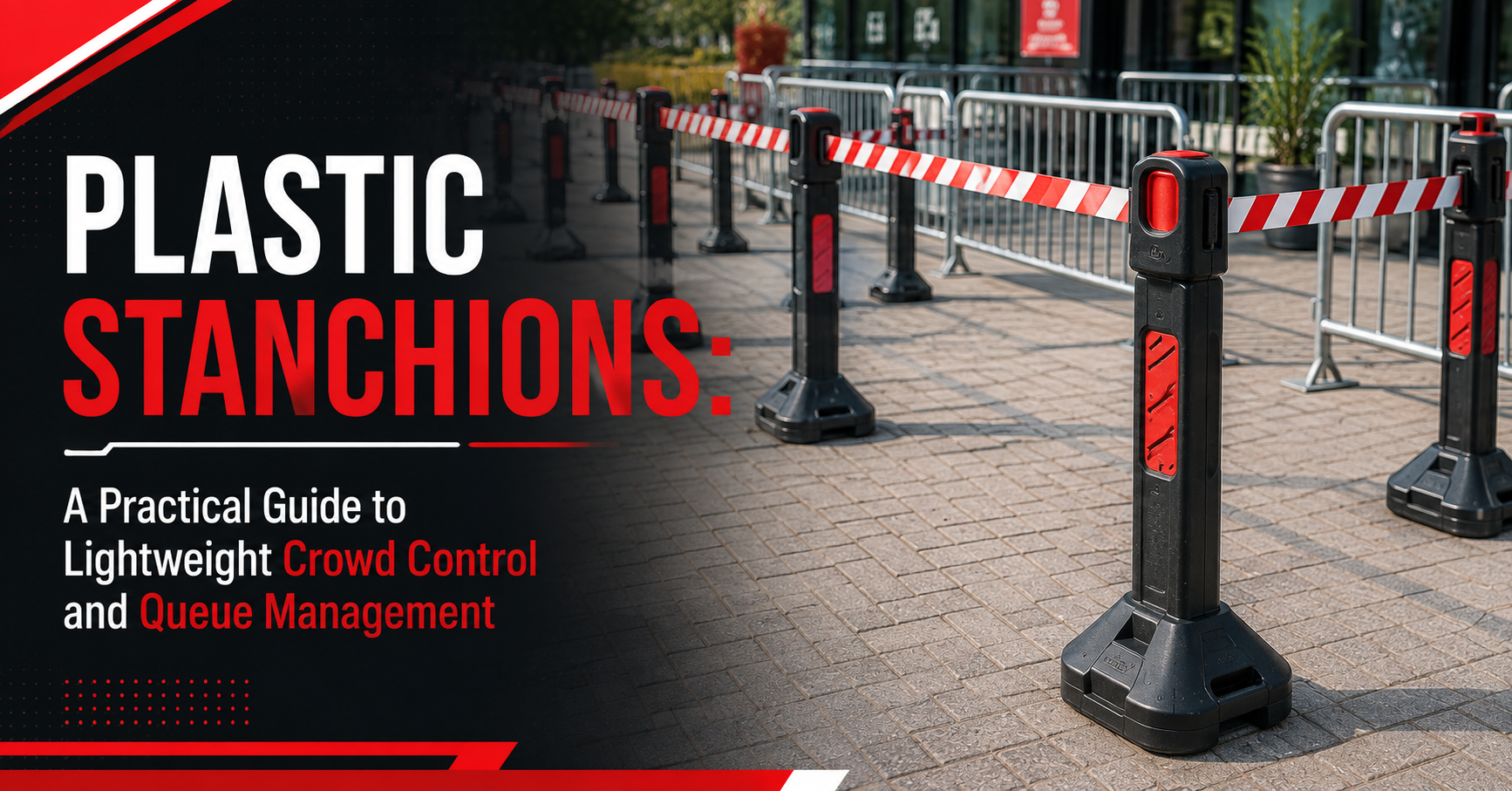
Plastic Stanchions: A Practical Guide to Lightweight Crowd Control and Queue Management
Not every crowd control or queue-management application requires heavy-duty or permanent equipment. In many settings, a lightweight and portable option can provide enough structure to organize temporary queues, define boundaries, guide pedestrian movement, or identify restricted areas.
Plastic stanchions can be a practical choice for these situations because they are generally easy to position, move, and store when crowd-control needs change. However, their suitability depends on the environment, expected pedestrian traffic, stability requirements, frequency of setup, and intended use. Choosing the right stanchion system should therefore begin with understanding the specific conditions it will be used in.
Plastic Stanchions: A Practical Guide to Lightweight Crowd Control and Queue Management
Plastic stanchions are lightweight crowd control posts used to create temporary queues, pedestrian routes, boundaries, and restricted areas. Their portability and simple setup can make them practical for applications where layouts need to change frequently, although they generally provide less weight and physical resistance than heavier metal stanchions or crowd control barriers.
Not every crowd control application requires heavy barriers or permanent installations. In many environments, plastic stanchions provide a lightweight and portable way to organize queues, guide pedestrian movement, define temporary boundaries, or identify areas where access should be limited.
From small events and trade shows to public spaces, customer-service areas, and temporary work zones, lightweight stanchions can offer a flexible approach to queue management. Their practicality depends on factors such as expected pedestrian traffic, required stability, setup frequency, environmental conditions, and how the equipment will be used.
What Are Plastic Stanchions?
Plastic stanchions are lightweight crowd-control posts designed to organize people and define temporary spaces. Depending on the system, they may be connected with plastic chain, retractable belts, ropes, or other accessories to create a visible boundary or queue.
Unlike heavier permanent systems, portable stanchions can generally be repositioned as customer flow or pedestrian movement changes.
How Plastic Stanchions Work
A basic system typically consists of crowd control posts and a stable base. Connecting accessories create the actual boundary or guide people along a designated path.
Common configurations include:
- Plastic chain between stanchion posts
- Retractable belt barriers
- Post and rope stanchions
- Queue barriers
- Stanchion systems with sign frame tops
- Other compatible chain or belt accessories
The right configuration depends on whether the primary purpose is line management, pedestrian guidance, restricted access, or temporary space separation.
Why Use Plastic Stanchions for Crowd Control?
Plastic stanchions offer a practical option when crowd control needs to be temporary, portable, or frequently reconfigured. Their relatively lightweight construction can make them convenient for staff who need to establish and change queues or boundaries during normal operations.
Lightweight and Portable
Lightweight stanchions can be easier to transport, position, and store than heavier crowd-control equipment. This can be useful for venues where layouts change regularly or where equipment needs to be moved between different areas.
Portability can be particularly useful for small events, trade shows, product launches, and customer-service environments.
Flexible for Temporary Crowd Control
Plastic crowd control barriers can help create temporary routes and boundaries without requiring a permanent installation. Staff can reposition the posts as queues change, different areas become available, or pedestrian movement needs to be redirected.
This flexibility makes them useful for short-term crowd management applications.
Visible Pedestrian Guidance
Stanchions can provide a clear visual indication of where people should wait or move. When combined with appropriate signage, they can help communicate queue directions, restricted areas, or access arrangements.
Clear physical guidance can also support a more organized customer experience.
Plastic Stanchions vs. Other Crowd Control Options
Plastic stanchions are best suited to applications where portability and flexibility are more important than maximum physical resistance. Heavier systems may be more appropriate where equipment needs to withstand greater pedestrian traffic, environmental exposure, or repeated physical contact.
Plastic Stanchions
Plastic systems may be appropriate for:
- Temporary queues
- Indoor customer-service areas
- Small events
- Trade shows
- Public spaces
- Product launches
- VIP areas
- Temporary access restrictions
Their suitability should be evaluated based on the expected conditions rather than simply the material used.
Retractable Belt Stanchions
Retractable belt stanchions use a belt mechanism to create a flexible queue or boundary. They can be useful when a clean, organized appearance is important or when the distance between posts needs to be adjusted.
Retractable belt barriers are commonly considered for reception areas, airports, transport facilities, retail environments, and event spaces.
Post and Rope Stanchions
Post and rope stanchions combine upright posts with connecting ropes to create a more traditional presentation. Velvet rope stanchions are often associated with entrances, VIP access, formal events, and areas where appearance is an important consideration.
The appropriate system depends on both functional requirements and the desired presentation.
Where Are Plastic Stanchions Commonly Used?
Plastic stanchions can be used in a range of temporary crowd-management and pedestrian-guidance situations. Their suitability varies according to traffic levels, space configuration, environmental conditions, and the required stability.
Events and Trade Shows
Event stanchions can help organize registration lines, entrances, information areas, and temporary access points. They can also help direct attendees around displays or define areas during product launches and other events.
For the events industry, portability can be useful when floor plans and attendee movement change throughout an event.
Public Spaces and Customer Areas
Plastic stanchions can help organize customer flow in public-facing areas. They may be used near service counters, reception desks, ticketing points, waiting areas, or temporary access restrictions.
Well-organized queues can make movement more predictable and contribute to a smoother customer experience.
Construction Sites and Temporary Work Areas
Stanchions can help identify temporary boundaries around work areas when the application calls for lightweight pedestrian guidance. However, they should not automatically be treated as a substitute for purpose-designed site barriers or protective systems.
Construction environments should be assessed based on the specific hazards, traffic, access requirements, and applicable site standards.
Transport and Industrial Environments
Air and rail transport facilities, loading docks, and industrial facilities may require more robust traffic-management equipment depending on the environment. Lightweight plastic systems may have limited suitability where there is frequent vehicle movement, high pedestrian traffic, strong environmental exposure, or a need for greater impact resistance.
The intended function should always determine the equipment selected.
How Do Plastic Stanchions Support Queue Management?
Plastic stanchions can make queues easier to establish by giving people a visible waiting area and a defined direction of movement. They can be arranged to create single lines, switchbacks, entry lanes, or temporary waiting zones.
Creating Organized Queue Lines
Queue stanchions can define where customers should wait and where the line should progress. This can reduce uncertainty about where a queue starts and where it should move next.
The layout should leave sufficient space for people to enter, exit, and move through surrounding areas.
Managing Customer Flow
Stanchions can help direct customer flow toward service points without requiring permanent changes to the space. Staff can adjust the arrangement when demand increases or decreases.
This makes them useful for environments where line management needs to change throughout the day.
Supporting VIP Access
Stanchions can also help identify VIP areas or controlled access points. Rope systems, belt barriers, or signage can make distinctions between general and restricted areas more visible.
However, physical stanchions should be considered one part of an overall access-control approach.
What Features Should You Consider?
The right plastic stanchion depends on how and where it will be used. Comparing the base, connecting system, material, accessories, and expected traffic can help determine whether a particular model is appropriate.
Base Weight and Stability
Base weight is an important consideration when selecting lightweight stanchions. A lighter system may be easier to move but may provide less stability in situations involving frequent contact, higher pedestrian traffic, or environmental factors.
The required stability should be matched to the intended application rather than choosing solely based on portability.
Impact Resistance
Impact resistance should be considered when stanchions may experience frequent contact or accidental knocks. Material properties, base design, construction, and operating conditions can all affect how a product performs.
Material science can provide useful context when comparing different plastics, but product specifications and actual use conditions remain important.
Connecting Accessories
The connection system determines how the stanchions can be arranged. Options may include plastic chain, retractable belts, ropes, and other compatible accessories.
When selecting a system, check that the accessories are designed to work together and suit the intended layout.
Sign Frame Tops
Sign Frame Tops can add another layer of communication to a stanchion system. They may be used to display directional information, queue instructions, access notices, or other temporary messages.
Available features vary by product and stanchion system, so specifications should be reviewed before selecting a particular configuration.
Are Plastic Stanchions Suitable for Every Crowd Control Situation?
No, plastic stanchions are not a universal solution for crowd control. Their suitability depends on the environment, pedestrian traffic, stability requirements, exposure to weather or other conditions, frequency of setup, and intended purpose.
When a Lightweight System May Work Well
A lightweight system may be appropriate when the primary goal is temporary pedestrian guidance or queue organization. Examples can include indoor queues, trade shows, small events, reception areas, and temporary customer-service arrangements.
When a More Robust System May Be Appropriate
A more robust barrier may be preferable when greater stability, impact resistance, or physical separation is required. High-traffic environments, industrial facilities, loading docks, transport areas, and situations involving vehicles may require equipment specifically designed for those conditions.
This distinction is important because crowd control equipment should be selected according to the risks and operating environment rather than appearance or convenience alone.
Plastic Stanchions as Part of a Broader Crowd Management Strategy
Plastic stanchions work best as one component of a broader crowd-management approach. They can establish physical boundaries and guide pedestrian movement, but they do not replace appropriate planning, signage, staffing, access procedures, or monitoring.
Combine Physical Guidance With Clear Information
Queue barriers are more effective when people can easily understand where to enter, wait, and exit. Combining stanchions with clear signs or staff instructions can make temporary arrangements easier to follow.
Review the Environment Before Setup
Before using plastic stanchions, consider pedestrian traffic, available space, expected crowd size, environmental conditions, and the purpose of the barrier. The arrangement should support the intended movement pattern without creating unnecessary obstructions.
Review and Adjust the Layout
Crowd management needs can change throughout an event or operating period. Staff may need to reposition portable stanchions when queues grow, customer flow changes, or a temporary area is no longer required.
Regular observation can help ensure the setup remains appropriate for current conditions.
Potential Risks or Drawbacks of Plastic Stanchions
Plastic stanchions can be useful for lightweight and temporary crowd-control applications, but they are not suitable for every environment or purpose. Their performance can vary depending on the product design, materials, base weight, accessories, and conditions in which they are used.
- Lower weight may reduce stability — Lightweight construction can make stanchions easier to move, but it may also provide less resistance to being knocked or displaced.
- Wind can affect some outdoor applications — Lightweight posts and bases may be more susceptible to movement in windy conditions, particularly in exposed areas.
- Plastic components may be less durable under repeated heavy impact — Frequent impacts or rough handling may affect some plastic components more quickly than equipment designed for heavier use.
- May not provide strong physical separation — Plastic stanchions are generally intended for guidance, queuing, or visual separation and may not be appropriate where a robust physical barrier is required.
- Lightweight bases may move if bumped — Regular pedestrian contact or accidental impacts can cause some systems to shift from their intended position.
- Some environments may require more permanent-looking equipment — Formal facilities, high-traffic venues, or certain customer-facing spaces may call for a different appearance or more substantial barrier system.
- Product quality and weather resistance can vary — Construction materials, finishes, and resistance to outdoor conditions differ between products and manufacturers.
- Accessory compatibility can differ — Belts, chains, ropes, signs, and other accessories may not be interchangeable between models, so compatibility should be confirmed before use.
- Harsh outdoor conditions may affect longevity — Prolonged exposure to sunlight, rain, temperature changes, or other environmental conditions can affect some plastic materials over time.
Before installation, review the specific product specifications and intended use. Consider the expected pedestrian traffic, environmental conditions, stability requirements, and accessories needed to determine whether a particular plastic stanchion system is appropriate for the application.
Frequently Asked Questions About Plastic Stanchions
Are plastic stanchions good for crowd control?
Plastic stanchions can be useful for lightweight, temporary crowd control applications. They can create queues, guide pedestrian movement, and define temporary boundaries. Their suitability depends on expected traffic, stability requirements, environment, and intended use.
What are plastic stanchions used for?
Plastic stanchions are commonly used to organize queues, guide pedestrians, and define temporary areas. They can be used at events, trade shows, customer-service areas, public spaces, and other locations where portable crowd management is needed.
Are plastic stanchions suitable for outdoor use?
Some plastic stanchions may be suitable for outdoor applications, depending on their construction and design. Weather, wind, ground conditions, temperature, and expected pedestrian traffic should be considered. Always check the manufacturer’s specifications for the intended environment.
What is the difference between plastic stanchions and retractable belt stanchions?
Plastic stanchions generally use lightweight posts and may connect with chain or other accessories, while retractable belt stanchions use a retractable belt mechanism. Both can support queue management, but they may differ in appearance, flexibility, stability, and application.
Can plastic stanchions be used at events?
Yes, plastic stanchions can be used at many events where lightweight, temporary queue or pedestrian guidance is appropriate. They may help organize registration areas, entrances, waiting lines, or restricted sections. Event planners should select equipment based on expected attendance and site conditions.
Do plastic stanchions replace barriers at construction sites?
Not necessarily, because construction sites may require purpose-designed barriers based on the hazards present. Lightweight stanchions can provide visual guidance or temporary pedestrian separation in some situations, but they should not be assumed to provide the same function as protective site barriers.
Choosing Plastic Stanchions for the Right Application
Plastic stanchions can be a practical choice when a crowd-control system needs to be lightweight, portable, and easy to reconfigure. They can support queue management, line organization, pedestrian guidance, and temporary access control across a variety of settings.
The best choice depends on the environment and the job the equipment needs to perform. Consider traffic levels, base weight, impact resistance, connecting accessories, stability, setup frequency, pedestrian flow, and intended use before selecting a system. For more demanding environments, a heavier or purpose-designed crowd-control solution may be more appropriate.
Plastic Stanchion Features and Their Common Uses
| Feature | Why It Matters | Common Application |
|---|---|---|
| Lightweight construction | Makes posts easier to move and reposition | Temporary queues and events |
| Portable base | Supports frequent setup changes | Registration and ticketing areas |
| Chain compatibility | Creates visible temporary boundaries | Restricted areas and pedestrian routes |
| Belt compatibility | Supports organized queue lanes | Retail and service environments |
| High-visibility design | Makes boundaries easier to notice | Temporary operational areas |
| Sign compatibility | Adds instructions or directions | Entrances, queues, check-in areas |
| Outdoor-rated materials | Helps withstand appropriate environmental exposure | Temporary outdoor use |
Available features can differ by product and manufacturer. Check the specific product specifications to confirm the materials, base design, connection options, accessories, and intended applications before selecting a plastic stanchion system.
Choosing the Right Crowd Control Option
Before choosing plastic stanchions, compare your queue layout, pedestrian traffic, setup frequency, storage needs, operating environment, and required level of physical separation. These factors can help determine whether lightweight stanchions are appropriate or whether another crowd-control option would better suit the application. Learn more about the different types of stanchions: Stanchion Guide: Best Options for Crowd Control and Safety.
For events, facilities, or crowd-management situations involving complex safety considerations, regulatory requirements, or high-density pedestrian traffic, consider obtaining guidance from a qualified professional. Their input can help ensure the selected equipment and layout are appropriate for the specific environment and intended use.